Storm Chaser / SCV2
Normalizing independent public data into one useful experience.
Storm Chaser combines local forecasts, U.S. severe-weather intelligence, radar, tropical systems, and global natural events across a resilient interactive interface.
Project context
What the system needed to make clear.
Government, scientific, and meteorological providers publish valuable information through different schemas, geographic models, update cycles, and reliability characteristics. The application must make those differences understandable without pretending they do not exist.
- Project
- ACC system
- Discipline
- Weather intelligence application
- Current state
- Development Preview
The constraint before the interface.
Weather alerts, radar, tropical systems, earthquakes, wildfires, floods, and other events originate from independent providers with inconsistent data shapes.
A single provider failure should not prevent the rest of the experience from remaining useful.
Build around the actual requirement.
SCV2 uses provider-specific adapters and normalized event structures so the interface can compare and present different source types consistently.
Independent loading paths, fallback behavior, saved events, and shareable state keep the experience usable while preserving source context.
Product walkthrough
How the experience moves from need to useful action.
- 01
Local weather
Open-Meteo powers current conditions, location search, hourly forecasts, and three-day context.
- 02
U.S. storm center
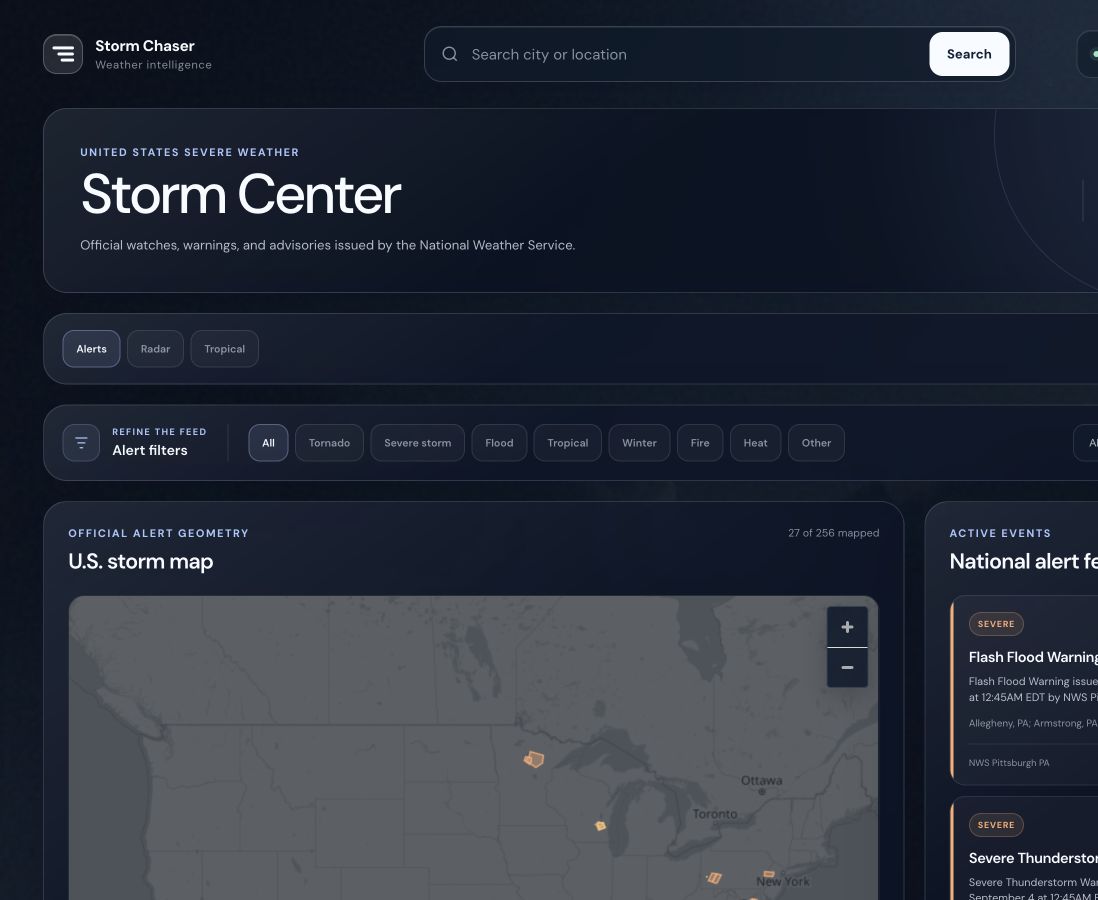
NWS alerts, official geometry, filters, radar, and NHC/CPHC tropical data share one map-driven workspace.
- 03
Live Earth
USGS, NASA EONET, GDACS, and tropical feeds are normalized into a consistent global event model.
- 04
Resilient state
Provider isolation, last-known-good handling, saved events, and URL state protect the user experience.
System logic
The structure behind the visible experience.
Normalized event layer
Technical depth
Engineering in service of the product.
Technology supports the operating story. It does not replace it.- JavaScript ES modules
- MapLibre
- Open-Meteo
- NOAA / NWS
- NHC / CPHC
- USGS
- NASA EONET
- GDACS
- Vitest
- Official alert geometry
- Provider-level adapters
- Normalized global event records
- Isolated provider failures
- Saved and shareable event state
- Automated data and UI tests
Business purpose
What this work is designed to enable.
SCV2 demonstrates how ACC can take a complicated external-data environment and build a clearer decision surface without flattening the nuance of the source material.
Start with the business problem